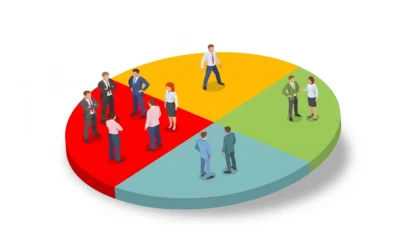
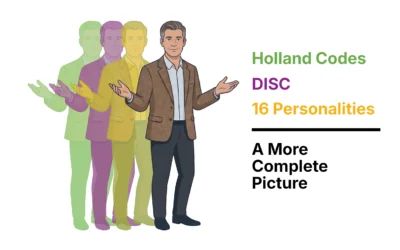
One of the biggest mistakes organizations make with personality assessments is expecting a single system to explain everything about a person. But people are more complex than that. Different personality frameworks tend to measure different dimensions of how people...
Every Team Has a Cultural Gravity — How to See What Shapes It
Walk into enough leadership meetings and you start noticing that teams develop personalities of their own. Not official personalities. Nobody writes them down. But they’re there. Some teams move at a blistering pace. People interrupt each other constantly, ideas get...
Why Personality Test Results Sometimes Seem “Wrong” (But Aren’t)
You review someone’s personality assessment results… and something doesn’t add up. The report suggests one thing—but their real-world behavior tells a different story. At that point, most people ask the wrong question: “Is the assessment wrong?” In many cases, the...
Using Personality Insights to Build Stronger, Smarter Teams
Every person approaches work differently. Some bring structure and stability. Others thrive on flexibility and action. Some drive innovation, while others inspire and develop the people around them. Personality insights—especially those drawn from the 16 types based...
Motivators Infographic
Utilized in career counseling, the Holland Code (RIASEC) aligns individuals’ work preferences and motivations with appropriate career paths. The theory classifies people into six distinct personality types, each embodying unique work styles and inclinations. This...
Introverted Thinking vs Extroverted Thinking
Did you know that personality shapes how we think, work, and communicate? According to Myers and Briggs theory, there are 16 distinct personality types, each with its own unique blend of traits arranged in a specific order of cognitive functions. The first trait is...
Theories Behind the 3D MAP
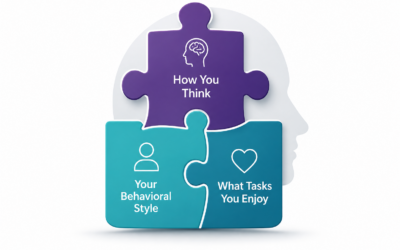
Employees aren’t one dimensional. Which is why a single personality assessment rarely reveals the whole picture of the person you’re hiring or managing. Each test gives you a single slice, rather than a complete whole. The Talent Insights MAP™ assessment addresses...
What is Your Management Style?
I'm sure you have firsthand experience of the impact that a manager’s style can have on a team's performance. It's crucial to ensure that the right manager is in the right role for maximum success. There's no one-size-fits-all approach to management. Each style has...
Introverted iNtuition vs. Extroverted iNtuition
Everyone uses intuition to some degree. People who use intuition pay attention to their impressions and are able to decipher meaning from patterns of information. Someone who prefers iNtuition has learned to think through data and patterns in order to discover new...
Unlocking the 16 Personality Types: A Guide to Understanding People
Some of the most well known personality profiles are based on the Theory of Psychological Types, which was put forth by Swiss psychologist Carl G. Jung (1875-1961). Jung suspected that the seemingly random behaviors of people could be anticipated and detected through...
Introverted Sensing vs Extroverted Sensing
Sensing is one of the 4 basic functions in Myers & Briggs personality theory. Referring to the way a person prefers to take in information, it is the opposite of iNtuition and simply means that the person prefers to pay more attention to data taken in through the...
Introverted Feeling vs Extroverted Feeling
Everyone has feelings. Some are more expressive. Others are more reserved. But everyone has feelings. In Myers & Briggs terms, the Feeling function simply means there is a preference in making decisions by considering what the people involved in the situation care...