
Personality at Work Series: DISC • Holland Codes • 16 Personalities
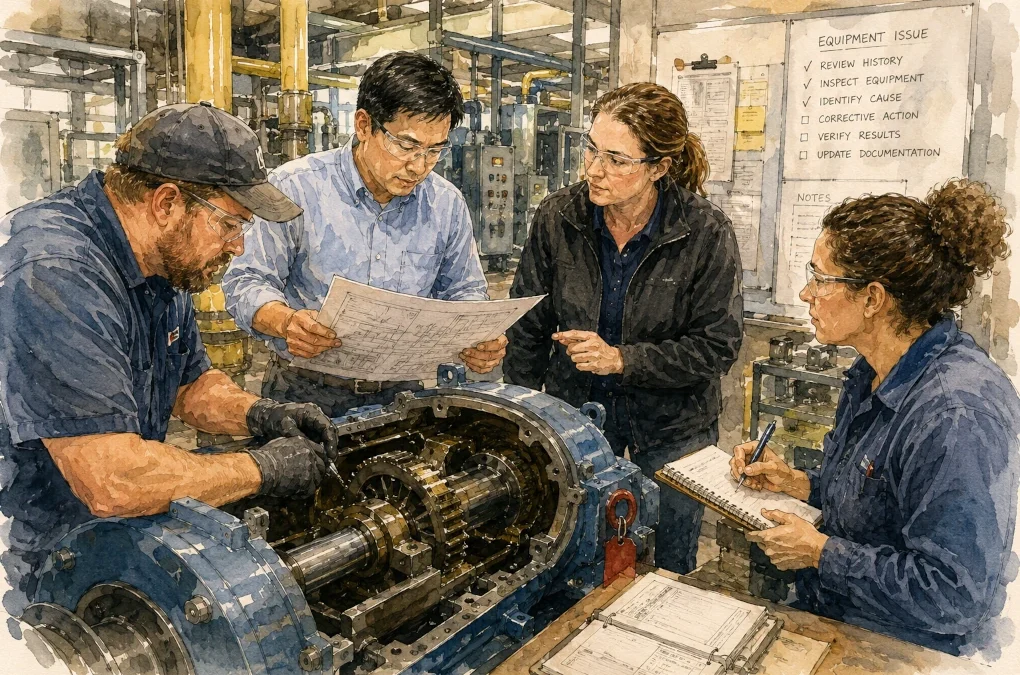
A maintenance team is trying to solve a recurring equipment problem.
One technician wants to open the machine and inspect it.
An engineer wants to review the failure history before anyone changes anything.
The shift supervisor is focused on getting production running again.
Another employee is documenting what has already been tried so the next shift does not repeat the same work.
All four are contributing to the same problem.
They are just approaching it differently.
That is often what strong teams look like.
The goal is not to assemble a group of people who think and work the same way. It is to bring together people whose different approaches help the team notice more, solve problems more completely, and carry work through from idea to execution.
Personality insights can help managers understand those differences.
Used carefully, they can also help identify gaps in how a team approaches its work.
What Does a Complementary Team Look Like?
A complementary team has different forms of strength available when the work requires them.
Some employees are comfortable acting quickly.
Others slow the group down long enough to examine the evidence.
Some notice how a decision will affect people.
Others naturally think about process, implementation, or practical feasibility.
These differences can create friction.
They can also improve the quality of the team’s work.
Consider a product launch.
The team may need people who can:
- Identify what customers need
- Analyze market and performance data
- Develop the product
- Organize the launch process
- Communicate with stakeholders
- Identify risks
- Coordinate deadlines
- Support customers after release
If everyone on the team is strongest in the same area, other parts of the work may receive less attention.
A group full of idea generators may produce excellent concepts but struggle to finish them.
A team dominated by careful planners may build reliable processes but move slowly when conditions change.
A group of decisive people may create momentum while overlooking issues that deserve more discussion.
Complementary teams have more options available.
Complementary Does Not Mean Opposite
Managers sometimes hear the idea of complementary personalities and assume they should deliberately pair opposites.
That can be too simplistic.
A quiet employee does not automatically need an outgoing partner.
A highly analytical employee does not automatically need a highly emotional one.
A fast decision-maker does not always need someone who moves slowly.
The better question is:
What kinds of work and judgment does this team need?
Then ask:
Which of those capabilities are already strong, and which are underrepresented?
That keeps the focus on the work instead of trying to engineer a personality formula.
Start With the Team’s Purpose
Before thinking about personality, define what the team is responsible for accomplishing.
A manufacturing maintenance team has different needs from a sales team.
An engineering design group has different demands from a customer service department.
A project team implementing new software may need a different mix of strengths than the team that will operate the system after launch.
Start by identifying the work.
For example, a manufacturing improvement team may need to:
- Investigate recurring defects
- Understand equipment limitations
- Develop possible solutions
- Evaluate cost and risk
- Coordinate with production
- Document the new process
- Train operators
- Monitor results after implementation
Once those requirements are visible, managers can think more clearly about what different employees contribute.
How DISC Styles Can Complement One Another
DISC describes observable behavioral tendencies such as pace, directness, expressiveness, patience, and attention to detail.
No DISC style is inherently better for teamwork.
Different tendencies can become useful at different stages of the work.
High D: Creating Movement
Employees with strong Dominant traits often bring urgency and decisiveness.
They may be especially useful when a team needs to:
- Set priorities
- Make a difficult decision
- Remove obstacles
- Take ownership
- Keep a project moving
A High D team member may ask:
What are we waiting for?
That can be exactly the question a stalled team needs.
The same strength can become a problem if the group moves before important concerns have been heard.
High I: Building Engagement
Employees with strong Influential traits may contribute energy, communication, and relationship building.
They can help when the team needs to:
- Gain support
- Explain an idea
- Encourage participation
- Facilitate discussion
- Maintain enthusiasm
A High I employee may notice that a technically sound plan is failing because nobody outside the project team understands it.
That contribution can be just as important as the technical work itself.
High S: Maintaining Cooperation
Employees with strong Steady traits may help a team maintain continuity.
They often pay attention to:
- Relationships
- Follow-through
- Workload
- Cooperation
- How changes affect other people
A High S employee may notice that a project plan works on paper but creates an unrealistic burden for the night shift.
That observation can prevent implementation problems later.
High C: Strengthening Accuracy
Employees with strong Compliant traits may bring careful analysis, standards, and attention to detail.
They can be especially valuable when work involves:
- Quality
- Risk
- Compliance
- Technical specifications
- Documentation
- Error prevention
A High C team member may ask:
What evidence supports that assumption?
That question can feel inconvenient when everyone else is ready to move.
It may also prevent an expensive mistake.
The Risk of a Team Dominated by One DISC Style
A team with several similar DISC styles may develop a strong group tendency.
That is not automatically a problem.
It does create patterns managers should recognize.
A Team Heavy in High D
The group may make decisions quickly and tolerate disagreement well.
It may also:
- Move before quieter employees contribute
- Compete internally
- Underestimate implementation details
- Treat caution as resistance
A Team Heavy in High I
The group may communicate frequently and generate energy.
It may also:
- Produce more discussion than follow-through
- Make assumptions based on enthusiasm
- Overlook details
- Struggle with repetitive administrative work
A Team Heavy in High S
The group may cooperate well and provide dependable support.
It may also:
- Avoid difficult disagreement
- Delay decisions
- Protect routines that need to change
- Allow unresolved issues to continue
A Team Heavy in High C
The group may produce careful, defensible work.
It may also:
- Spend too long analyzing
- Become uncomfortable with ambiguity
- Focus heavily on errors
- Delay action while seeking more certainty
The answer is not always to add a different personality type.
Sometimes the manager can simply change the team’s process.
A High D-heavy team may need a required review step.
A High C-heavy team may need a defined decision deadline.
Structure can compensate for tendencies.
How 16 Personalities Preferences Shape Team Contribution
The 16 Personalities framework can help explain differences in how people process information and organize their work.
Extraversion and Introversion
Employees with an Extraversion preference may contribute through discussion.
They may:
- Think aloud
- React quickly
- Build ideas through conversation
- Help groups maintain momentum
Employees with an Introversion preference may contribute differently.
They may:
- Develop ideas privately
- Notice issues after reflection
- Prepare more thoroughly before speaking
- Prefer written communication for complex topics
A meeting dominated by verbal discussion can make the Extraverted employees appear more engaged.
The Introverted employee may have the strongest analysis in the room but need time before presenting it.
Complementary teamwork requires a process that allows both styles to contribute.
Sharing information before meetings can help.
So can allowing written follow-up afterward.
Sensing and Intuition
Employees with a Sensing preference may focus on:
- Current facts
- Practical requirements
- Direct experience
- Existing processes
- What can realistically be implemented
Employees with an Intuition preference may focus on:
- Patterns
- Possibilities
- Future implications
- New approaches
- Connections others have not considered
These perspectives can work well together.
Imagine a company redesigning its warehouse.
The Sensing-oriented employee may notice that a proposed storage layout creates an awkward forklift turn.
The Intuition-oriented employee may question whether the organization should rethink the entire picking process rather than simply rearrange shelving.
One perspective improves what exists.
The other may identify a larger opportunity.
Thinking and Feeling
Employees with a Thinking preference may naturally focus on:
- Logic
- Consistency
- Efficiency
- Objective criteria
- Tradeoffs
Employees with a Feeling preference may pay more attention to:
- Human consequences
- Relationships
- Customer experience
- Morale
- Values
A technically optimal solution can still fail if the people responsible for using it cannot work with it.
A popular solution can still be a poor business decision.
Teams often need both forms of judgment.
Judging and Perceiving
Employees with a Judging preference may help teams create:
- Plans
- Deadlines
- Clear decisions
- Defined responsibilities
- Closure
Employees with a Perceiving preference may help when the work requires:
- Flexibility
- Experimentation
- Adaptation
- Troubleshooting
- Keeping options open
During a product development project, the Judging-oriented employee may help establish the release plan.
The Perceiving-oriented employee may be especially effective when unexpected problems appear during testing.
Different stages of the work may reward different approaches.
Holland Codes and Complementary Work Interests
Holland Codes describe occupational interests.
They are especially useful when considering the kinds of work that naturally attract someone’s attention.
Realistic: Making It Work
Realistic employees often focus on practical execution.
They may contribute through:
- Equipment
- Installation
- Hands-on troubleshooting
- Physical systems
- Field conditions
They often ask:
Will this actually work in practice?
Investigative: Understanding the Problem
Investigative employees often contribute through:
- Analysis
- Diagnosis
- Research
- Testing
- Root-cause investigation
They may ask:
Why is this happening?
Artistic: Finding Another Approach
Artistic employees may contribute through:
- Design
- Interpretation
- Creative problem solving
- Communication
- New ideas
They may ask:
Is there a better way to think about this?
Social: Helping People Succeed
Social employees may contribute through:
- Coaching
- Training
- Collaboration
- Support
- Understanding employee needs
They may ask:
How will this affect the people doing the work?
Enterprising: Moving the Initiative Forward
Enterprising employees often contribute through:
- Leadership
- Persuasion
- Negotiation
- Coordination
- Ownership
They may ask:
How do we get this moving?
Conventional: Making It Repeatable
Conventional employees may contribute through:
- Process
- Documentation
- Scheduling
- Records
- Consistency
They may ask:
How do we make sure this keeps working after the project is over?
These questions are different.
A strong team may need all of them.
One Manufacturing Problem, Several Useful Perspectives
Consider a plant experiencing repeated failures on a packaging line.
The problem is stopping production several times per week.
A Realistic maintenance technician inspects the equipment and notices abnormal wear on a guide assembly.
An Investigative engineer reviews the failure history and discovers that the failures occur mainly during one product run.
A High C quality specialist checks process specifications and identifies a setup parameter that frequently falls near the upper tolerance limit.
A Social supervisor talks with operators and learns that newer employees were trained differently from the experienced crew.
An Enterprising project lead coordinates maintenance, engineering, operations, and the equipment vendor.
A Conventional employee updates the standard work instructions and creates a verification checklist once the correction is confirmed.
No single contribution solves the entire problem.
Together, they produce a more complete response.
That is the value of complementary work styles.
Complementary Teams Still Need Shared Standards
Different work styles should not mean different expectations.
Every employee still needs to meet the requirements of the work.
A creative employee still needs to meet deadlines.
A decisive employee still needs to follow safety procedures.
A supportive employee still needs to address performance problems.
A detail-oriented employee still needs to act when the decision has been made.
Complementary teamwork works when employees have room to contribute differently within shared standards.
Diversity of Style Can Also Create Friction
The same differences that improve a team can make collaboration harder.
Fast Versus Careful
One employee believes the group needs to decide.
Another believes the group needs more evidence.
Without a clear decision process, both may see the other as the problem.
Practical Versus Conceptual
One person wants to solve what is happening now.
Another wants to rethink the system that produced the problem.
Both may become frustrated.
Flexible Versus Structured
One employee wants a defined plan.
Another wants to keep adjusting as new information arrives.
The conflict may be about process rather than personality.
Task Focus Versus People Focus
One person is concerned about the result.
Another is concerned about how the change will affect employees.
The team needs a way to consider both without treating either concern as irrelevant.
Managers Need to Make the Differences Useful
Simply having different personalities on a team does not guarantee better decisions.
Different perspectives become valuable when the team has a process for using them.
Managers can help by asking deliberate questions.
For example:
What practical problem are we overlooking?
What does the evidence tell us?
How will this affect the people responsible for carrying it out?
Is there another approach we have not considered?
Who owns the next step?
What process will keep this working after launch?
These questions create space for different forms of contribution.
They also prevent the loudest or fastest person from automatically setting the agenda.
Avoid Assigning Team Roles by Personality Label
Personality insights should not become permanent team roles.
Avoid thinking:
He is High D, so he should lead.
She is Social, so she should handle people issues.
He is Conventional, so give him the paperwork.
She is Investigative, so she should do the analysis.
The employee’s skills, experience, authority, workload, and development goals still matter.
A personality result may help explain why someone enjoys certain work.
It should not decide what opportunities they receive.
Complementary Teams Need Overlap Too
A team should not become so specialized that only one person can perform each kind of work.
Some overlap is healthy.
If only one employee understands the documentation system, that person becomes a bottleneck.
If only one employee can talk with customers, the team becomes dependent on that person.
If only one technician understands a critical machine, vacation or turnover becomes a serious operational risk.
Complementary teams need different strengths.
They also need enough shared capability to remain resilient.
Cross-training matters.
Watch for Cultural Gravity
Teams can gradually develop a dominant way of working.
If most people on the team value speed, new employees may learn that asking too many questions is unwelcome.
If most people value caution, employees may learn that proposing an unfinished idea is risky.
If the group strongly favors harmony, disagreement may disappear from meetings even when concerns remain.
If the team values independence, employees may hesitate to ask for help.
These patterns can become part of the team’s culture.
Personality insights can make them easier to recognize.
For a deeper look at this idea, see How Holland Codes Influence Team Dynamics and Workplace Culture.
A Practical Process for Building More Complementary Teams
1. Define the Work
Start with what the team actually has to accomplish.
Avoid beginning with personality profiles.
2. Identify the Types of Contribution Required
Ask what the work needs.
That might include:
- Practical execution
- Analysis
- Communication
- Coordination
- Documentation
- Creative problem solving
- Employee support
- Decision-making
3. Look at the Strengths Already Present
What does the team consistently do well?
What seems easy for this group?
Those patterns may reflect experience, personality, or both.
4. Look for Recurring Blind Spots
Where does the team repeatedly struggle?
Perhaps projects begin strongly but lose momentum.
Maybe decisions take too long.
Maybe ideas are implemented before frontline employees are consulted.
Maybe nobody owns documentation after launch.
Recurring problems can reveal missing forms of contribution.
5. Use Personality Data as Context
Assessment results may help explain why the patterns exist.
They should support observation rather than replace it.
6. Change the Process Before Assuming You Need Different People
If a team moves too quickly, introduce a required risk review.
If meetings favor verbal processors, send information in advance.
If documentation is repeatedly neglected, make it an explicit deliverable.
Sometimes process design solves the problem.
7. Add Capability When a Real Gap Exists
There may still be situations where the team genuinely lacks an important capability.
Hiring, cross-training, mentoring, or temporary outside expertise may be appropriate.
Base that decision on the work that is missing.
8. Review How the Team Performs Together
A group of individually talented employees can still operate poorly as a team.
Look at:
- Decision quality
- Follow-through
- Conflict
- Communication
- Workload
- Handoffs
- Speed
- Error rates
Team effectiveness shows up in the work.
Building a Team Is Different From Hiring a Collection of Personalities
Personality assessments can help managers understand how a team may behave.
They should not become a recipe for hiring.
There is no ideal ratio of DISC styles.
There is no perfect combination of Holland Codes.
There is no required set of 16 Personality types.
Strong teams are built around the work they need to perform.
People bring skills, knowledge, relationships, experience, judgment, and personality to that work.
Personality is one useful part of the picture.
Using Multiple Personality Frameworks Gives More Context
A team may look very different depending on which framework you examine.
Imagine a technical operations group with several High D DISC profiles.
That may suggest a fast, direct behavioral culture.
But the same team may have strong Realistic Holland interests, suggesting a preference for practical, hands-on work.
Its 16 Personalities results may show a concentration of Thinking and Judging preferences, adding a strong focus on logic and structure.
Together, those frameworks tell a richer story than any one of them alone.
They can help explain why the team moves quickly, values practical answers, expects competence, and prefers clear decisions.
Another team might look completely different.
This is one reason combining frameworks can be useful.
Learn more in Why Personality Assessments Are More Useful Together Than Alone.
Final Thoughts
Strong teams do not need everyone to work the same way.
They need people who can contribute what the work requires.
One employee may create momentum.
Another may catch the problem everyone else missed.
Someone may understand how the change will affect coworkers.
Another may turn a successful experiment into a dependable process.
Those differences can create friction.
They can also make the team stronger.
Managers get more value from personality insights when they use them to understand how the team works, where its blind spots may be, and how different employees can contribute.
The goal is not personality balance for its own sake.
The goal is a team capable of seeing the work from enough angles to do it well.
Explore more practical workplace applications in the Personality Types Explained series.
Frequently Asked Questions
What is a complementary team?
A complementary team includes people who contribute different strengths, perspectives, skills, and approaches that help the group handle the full range of work it is responsible for.
Should managers build teams based on personality types?
Personality information can provide useful context, but teams should be built primarily around the skills, experience, responsibilities, and capabilities required by the work.
Do teams need a balance of DISC styles?
There is no ideal DISC ratio. A team with similar styles can perform very well if managers understand the group’s tendencies and use processes that compensate for likely blind spots.
How can Holland Codes help with team composition?
Holland Codes can help managers understand the kinds of work that naturally interest team members, such as practical activity, analysis, creativity, helping others, leadership, or organization.
Can too many similar personalities hurt a team?
A strong concentration of similar work styles can create blind spots, but similarity is not automatically harmful. Managers can often address those risks through better processes, deliberate questions, and cross-training.
How do managers prevent personality differences from creating conflict?
Set clear expectations, define how decisions will be made, create opportunities for different communication styles to contribute, and keep disagreements focused on the work rather than personality labels.
Should personality assessments determine who leads a team?
No. Leadership responsibility should be based on role, competence, experience, judgment, and organizational needs. Personality insights may help a leader understand how they naturally approach the role.
What should managers look for when evaluating team composition?
Start with the work the team must perform. Look for the capabilities required, strengths already present, recurring blind spots, workload distribution, communication patterns, and areas where the team has become overly dependent on one person.
Hire Better and
Manage Smarter
We combine 3 proven, established assessments into one, giving you the most comprehensive view of a person.
Are you seeking an assessment for personal use? Click Here