
Personality at Work Series: DISC • Holland Codes • 16 Personalities
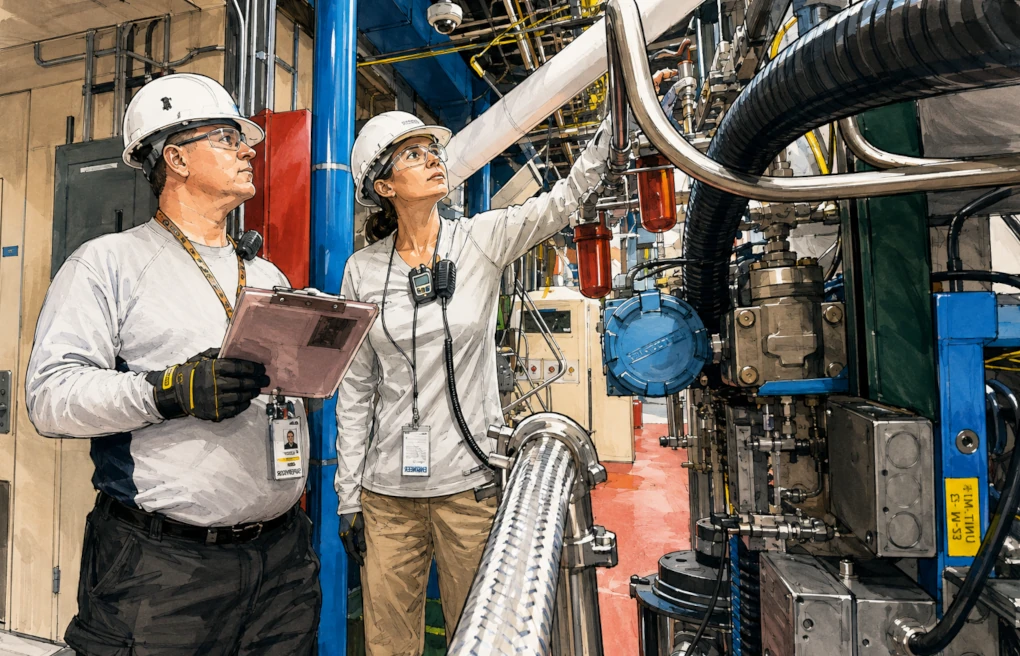
A production line stops after a quality technician identifies a measurement outside tolerance.
The operations supervisor wants to restart quickly and protect the schedule.
The quality technician wants more testing before releasing the equipment.
The maintenance lead wants to inspect the machine and determine whether the problem can be corrected immediately.
The engineer wants to understand whether the defect points to a larger design or process issue.
They are responding to the same decision.
Each person is paying attention to something different.
Workplace decisions involve more than facts. People also differ in how quickly they want to act, how much information they need, which risks receive their attention, and how comfortable they are making a choice without complete certainty.
Personality insights can help managers understand these tendencies.
They cannot tell you who will make the best decision. They can help explain why capable employees sometimes disagree about what deserves attention and when the team has enough information to move forward.
Why Decision-Making Styles Differ
Most workplace decisions require some combination of:
- Evidence
- Experience
- Practical judgment
- Risk assessment
- Human impact
- Timing
- Accountability
People rarely give equal weight to every factor.
One employee may begin with the desired result.
Another starts with the available data.
Someone else first considers how the decision will affect coworkers, customers, or the stability of the operation.
These differences often become more noticeable when the team is under pressure.
A manager may interpret hesitation as resistance when the employee is trying to prevent an avoidable mistake.
A careful employee may interpret speed as recklessness when the decision-maker is responding to a real deadline.
A practical worker may become frustrated when a discussion remains abstract.
An imaginative employee may feel that the team is settling for the first workable answer.
Understanding these tendencies can help teams discuss the decision itself instead of becoming distracted by assumptions about one another.
Personality Insights Should Inform Decisions, Not Make Them
A personality assessment should never decide:
- Which employee has authority
- Whether someone is qualified
- Which technical recommendation is correct
- Whether a safety concern is valid
- Which candidate should be hired
Those decisions require job-related evidence, defined responsibilities, and accountable judgment.
Personality results provide context.
They can help a manager ask better questions:
- Is the team moving too quickly?
- Are we collecting information that will change the decision?
- Has anyone considered the effect on the people involved?
- Are we protecting a familiar process simply because it feels safer?
- Does everyone understand who owns the final choice?
The goal is to improve the decision process without turning personality types into stereotypes.
How DISC Styles May Approach Decisions
DISC describes observable behavioral tendencies such as pace, directness, expressiveness, patience, and attention to detail.
Most people show a combination of DISC traits. Their approach may also change depending on the situation, their experience, and the authority they hold.
High D: Decisions Focused on Results and Forward Movement
Employees with strong Dominant traits often make decisions quickly.
They tend to focus on:
- The result that needs to be achieved
- The obstacle preventing progress
- The fastest workable response
- Who has the authority to act
- What happens if no decision is made
This can be valuable during time-sensitive work.
A field supervisor dealing with a delayed equipment delivery may quickly reorganize the crew, change the work sequence, and protect the schedule.
Other employees may still be discussing the disruption while the High D employee is already assigning the next steps.
Potential strength
High D employees can prevent teams from becoming stuck in discussion.
They are often willing to make a choice, accept responsibility, and adjust if the first approach fails.
Potential risk
Speed can become premature closure.
The employee may decide before hearing important technical information or may underestimate risks that do not interfere with the immediate objective.
A manager can ask:
What information would cause you to change this decision?
That question encourages the employee to consider evidence without removing their ability to act.
High I: Decisions Shaped Through Discussion and Possibility
Employees with strong Influential traits often think through decisions by talking.
They may focus on:
- How others respond to the idea
- Whether people will support it
- The potential opportunity
- How the decision will be communicated
- Whether the choice creates energy and momentum
A High I project lead may bring several people into the discussion, build enthusiasm around a promising option, and help the team imagine what success could look like.
Potential strength
High I employees can surface ideas, gain cooperation, and help people commit to a decision.
They may notice opportunities that a more cautious team would overlook.
Potential risk
Enthusiasm can move faster than verification.
A persuasive option may feel stronger than a well-supported one. The employee may also assume agreement because the conversation felt positive.
A manager can ask:
What evidence supports this option, and what still needs to be confirmed?
This preserves the employee’s ability to generate support while grounding the decision in facts.
High S: Decisions Focused on Stability and Human Impact
Employees with strong Steady traits often consider how a decision will affect existing relationships, routines, and responsibilities.
They may focus on:
- Whether the change will disrupt the team
- Who needs support
- Whether people understand what is expected
- How the decision affects ongoing work
- Whether the group can implement it consistently
A High S supervisor may hesitate to change a shift procedure until the team has received training and the handoff between crews has been addressed.
That hesitation may protect the operation from a poorly managed transition.
Potential strength
High S employees can identify implementation problems that are easy to miss during planning.
They often consider whether the decision will work for the people responsible for carrying it out.
Potential risk
The desire for stability can delay necessary action.
The employee may continue seeking agreement when the team needs a clear decision.
A manager can ask:
What support would the team need to carry this out successfully?
This turns concern about disruption into practical implementation planning.
High C: Decisions Based on Evidence and Standards
Employees with strong Compliant traits often want decisions to be accurate, defensible, and consistent with established requirements.
They may focus on:
- The available evidence
- Technical specifications
- Applicable procedures
- Risks and exceptions
- Whether the reasoning can withstand review
A High C quality manager may refuse to release a production batch until the measurements, sampling method, and disposition requirements have been verified.
Potential strength
High C employees can prevent teams from acting on incomplete information.
They often identify inconsistencies and risks that others overlook.
Potential risk
The search for certainty can continue after the team has enough information to decide.
More analysis may feel productive even when it will not change the recommendation.
A manager can ask:
Which unanswered question could materially change the decision?
This helps separate necessary analysis from additional detail that has little practical value.
How 16 Personalities Preferences Affect Decisions
The 16 Personalities framework can help explain how people gather information, evaluate options, and move toward a conclusion.
These preferences describe tendencies. They do not determine whether someone is decisive, logical, thoughtful, or effective.
Extraversion and Introversion
Employees with an Extraversion preference may develop their thinking through conversation.
They often benefit from:
- Discussing options aloud
- Hearing immediate reactions
- Asking questions as ideas form
- Working through the decision with other people
Employees with an Introversion preference may prefer to develop an initial position privately.
They often benefit from:
- Reviewing the information before a meeting
- Time to think without interruption
- Written options or background material
- An opportunity to respond after reflection
A meeting that immediately asks for opinions may favor employees who process verbally.
A manager can create a more balanced process by sharing the decision question in advance and allowing employees to submit additional thoughts afterward.
Sensing and Intuition
Employees with a Sensing preference often rely on concrete facts and direct experience.
They may ask:
- What has worked before?
- What do the measurements show?
- What is happening now?
- What steps are required?
- Is this practical?
Employees with an Intuition preference often look for patterns, implications, and future possibilities.
They may ask:
- What larger problem does this reveal?
- What could this become?
- Are we solving the right problem?
- Could the process be redesigned?
- What might change next?
Consider a recurring equipment failure.
A Sensing-oriented technician may focus on the damaged component, service history, and repair procedure.
An Intuition-oriented engineer may question whether the equipment is being used in a way the original design did not anticipate.
Both perspectives can improve the decision.
One addresses the immediate reality. The other examines the broader pattern.
Thinking and Feeling
Employees with a Thinking preference often evaluate decisions through logic, consistency, and objective criteria.
They may focus on:
- Cost
- Performance
- Efficiency
- Technical merit
- Whether the same rule would be applied in another case
Employees with a Feeling preference often give more attention to values, relationships, and human consequences.
They may focus on:
- How the decision affects employees
- Whether people are being treated fairly
- The effect on customers
- Trust and morale
- Whether the result reflects the organization’s values
These perspectives can create tension when each side believes the other is ignoring something obvious.
A decision to reduce weekend staffing may appear efficient in a spreadsheet.
It may also place an unreasonable burden on a smaller group of experienced employees.
A stronger decision examines both.
Judging and Perceiving
Employees with a Judging preference often want decisions to reach closure.
They may prefer:
- Defined options
- Clear deadlines
- Assigned responsibilities
- A final answer
- A plan that can be executed
Employees with a Perceiving preference may prefer to keep options open while new information emerges.
They may value:
- Flexibility
- Experimentation
- Additional alternatives
- Adjusting the plan during implementation
- Avoiding premature commitment
The Judging-oriented employee may see continued discussion as indecision.
The Perceiving-oriented employee may see early closure as an unnecessary limitation.
A manager can define which parts of the decision are fixed and which remain adjustable:
We are selecting the equipment vendor today. The installation sequence can be revised after the site review.
This creates closure without pretending every detail is settled.
How Holland Codes Influence Decision Priorities
Holland Codes primarily describe work interests.
They do not directly measure decision-making style.
Those interests can still influence which aspects of a decision naturally capture someone’s attention.
Realistic Types: What Will Work in Practice?
Realistic employees are often drawn to practical tasks, tools, equipment, and visible results.
They may evaluate decisions by asking:
- Can this be built, repaired, or operated?
- Do we have the right tools?
- Will it work under real conditions?
- How difficult will it be to maintain?
- What will the person doing the work encounter?
An engineer may approve a design on paper.
A Realistic maintenance technician may immediately notice that a component cannot be reached without removing another assembly.
That practical observation belongs in the decision.
Investigative Types: What Does the Evidence Explain?
Investigative employees are often interested in analysis, research, diagnosis, and understanding cause.
They may ask:
- What is producing the result?
- What evidence supports the explanation?
- Have we ruled out other causes?
- Is this an isolated event or a pattern?
- What additional test would be useful?
They can strengthen decisions involving technical uncertainty.
They may also continue investigating after the organization needs to act.
A deadline and clearly defined decision criteria can keep the analysis focused.
Artistic Types: Is There a Better Approach?
Artistic employees are often drawn to originality, interpretation, and new possibilities.
They may ask:
- Are we limiting ourselves to familiar options?
- Could the problem be reframed?
- Is there a more effective design?
- Does the solution communicate clearly?
- Are we preserving room for creativity?
They can help teams move beyond incremental improvements.
They may become frustrated when every idea is evaluated only by whether it resembles the existing process.
Managers can define the constraints while leaving room for invention:
The design must fit the current footprint and meet the safety standard. The internal layout is open for reconsideration.
Social Types: How Will This Affect People?
Social employees are often interested in helping, teaching, supporting, and developing others.
They may ask:
- Who will be affected?
- Do employees understand the change?
- What training is needed?
- Will this make someone’s work harder?
- How can we help people succeed?
They can improve decisions that require adoption, communication, or behavior change.
They may also give too much weight to avoiding discomfort.
A difficult decision can still be necessary.
The Social perspective helps the organization carry it out responsibly.
Enterprising Types: What Opportunity Can We Create?
Enterprising employees are often drawn to leadership, persuasion, competition, and forward movement.
They may ask:
- What outcome can we achieve?
- Who needs to support the decision?
- What is the opportunity?
- How quickly can we act?
- Who will take ownership?
They can help teams move from discussion to execution.
Their optimism and confidence can also cause others to follow before the assumptions have been tested.
Strong Enterprising decision-makers invite challenge before committing the team.
Conventional Types: How Will This Be Controlled?
Conventional employees are often interested in organization, records, procedures, and dependable systems.
They may ask:
- What process will govern this?
- Who records the decision?
- How will the work be tracked?
- Does this comply with the requirement?
- What happens when an exception occurs?
They help turn decisions into repeatable work.
They may resist an unconventional option when the real problem is that the supporting process has not yet been created.
The team may need to distinguish between an unsafe choice and an unfamiliar one.
Workplace Decision Examples
Deciding Whether to Stop Production
A quality technician discovers that a critical measurement is outside tolerance.
The operations supervisor wants to know whether the line can continue.
The maintenance lead wants to inspect the machine.
The engineer wants to review the pattern across earlier batches.
A useful decision process might establish:
- Whether the condition creates a safety or compliance concern
- Which products may be affected
- Whether continued production increases the potential loss
- What test will determine whether the equipment can restart
- Who has authority to release the line
The different personalities involved can contribute useful information.
The decision still needs one accountable owner.
Selecting an Engineering Solution
A facility needs to replace an unreliable pump system.
One engineer recommends a proven design already used at another location.
Another proposes a newer system with better efficiency and monitoring.
Maintenance prefers equipment the technicians already know how to service.
Finance focuses on the total cost.
Operations is concerned about installation downtime.
The strongest choice may not be the system that performs best on one measure.
The team needs agreed criteria before comparing alternatives:
- Reliability
- Installation requirements
- Maintenance capability
- Operating cost
- Downtime
- Safety
- Expected service life
Defined criteria prevent the most confident presenter from controlling the result.
Holding or Releasing a Questionable Batch
A test result falls near the edge of the acceptable range.
A High D leader may want a quick disposition.
A High C quality professional may want confirmation testing.
An Investigative employee may question whether the measurement system itself is reliable.
A Social employee may raise concern about the effect on the customer.
The team should determine which questions can change the decision.
Testing that cannot affect the outcome only delays closure.
Testing that could reveal a serious defect is necessary.
Responding to a Customer Equipment Failure
A field technician discovers that a customer’s system cannot be restored during the initial service visit.
The immediate decision may involve:
- Whether temporary operation is safe
- Whether replacement parts are available
- What the customer should be told
- Whether another technician is needed
- How much authority the field employee has to commit company resources
The technical answer and the customer communication need to remain aligned.
An employee who focuses only on the repair may overlook the customer’s operational problem.
An employee who focuses only on reassurance may promise something the service team cannot deliver.
Why Decision-Making Differences Create Conflict
Many workplace disagreements are partly disagreements about process.
Speed Versus Thoroughness
One employee believes the team is avoiding responsibility.
Another believes the team is about to make a preventable mistake.
The manager should define how much uncertainty the decision can tolerate.
Proven Methods Versus New Possibilities
One person wants to rely on experience.
Another sees the current problem as evidence that the familiar method is no longer enough.
The team should clarify which constraints are real and which are assumptions.
Logic Versus Human Impact
One employee emphasizes cost, output, or technical performance.
Another emphasizes fairness, workload, or customer trust.
Both may be using valid criteria.
The decision process should make those criteria visible.
Closure Versus Flexibility
One person wants a final plan.
Another expects the situation to change.
The team can decide what must be settled now and what can remain adjustable.
A Practical Decision Process for Teams
Personality insights become most useful when teams pair them with a clear process.
Define the Decision
State exactly what needs to be decided.
A vague question such as “What should we do about quality?” produces a broad discussion.
A better question is:
Should we hold the current batch, release it, or perform confirmation testing before disposition?
Identify the Decision Owner
Input can come from many people.
Final accountability should be clear.
Without a decision owner, meetings can become negotiations over who feels most strongly.
Establish the Criteria
List what the decision must account for.
Depending on the issue, criteria might include:
- Safety
- Quality
- Cost
- Time
- Customer impact
- Technical feasibility
- Compliance
- Long-term maintenance
Agreeing on the criteria before debating the options reduces personal conflict.
Separate Facts from Assumptions
Teams often discuss predictions as though they are confirmed facts.
Write down:
- What is known
- What is estimated
- What remains uncertain
- Which uncertainty matters
This gives careful employees room to identify risks without allowing every unknown to stop the decision.
Invite Different Perspectives
Ask questions that draw out the team’s varied priorities:
- What could prevent this from working in the field?
- What does the available evidence support?
- Who will be affected by the change?
- What opportunity are we overlooking?
- What process will be needed to implement this?
- Which assumption deserves the most scrutiny?
These questions help quieter employees contribute before the group forms a consensus.
Set a Decision Deadline
Some decisions need immediate action.
Others benefit from additional analysis.
Set the deadline based on the consequences of waiting, rather than the comfort level of the fastest or most cautious person in the room.
Record the Reasoning
Document:
- The decision
- The evidence considered
- The assumptions made
- The responsible owner
- The next review point
This creates accountability and helps the organization learn from the result.
Review the Outcome
A decision can be reasonable based on the information available and still produce a poor outcome.
Reviewing the result helps the team improve its process without searching for someone to blame.
Ask:
- Which assumptions proved correct?
- What did we miss?
- Did we act at the right time?
- Which information was genuinely useful?
- What should we do differently next time?
Match the Process to the Stakes
Every decision does not require the same amount of analysis.
Reversible Decisions
If the team can test an option at low cost and change course easily, a small experiment may be better than a long debate.
Examples include:
- Trying a new meeting format
- Testing a revised checklist
- Piloting a scheduling process
- Running a limited equipment trial
Difficult-to-Reverse Decisions
Decisions involving major cost, safety, legal exposure, facility design, or long-term commitments deserve more structured review.
Examples include:
- Selecting a major equipment platform
- Changing a safety procedure
- Hiring for a critical leadership role
- Redesigning a production process
- Committing to a long-term supplier
The decision process should reflect the potential consequence of being wrong.
Common Decision-Making Mistakes
Letting the Most Confident Person Control the Decision
Confidence can help a team move forward.
It does not prove that the recommendation is correct.
Ask for evidence, assumptions, and potential failure points.
Treating Questions as Resistance
A detailed question may reveal a genuine risk.
A manager should determine whether the employee is clarifying the decision or avoiding it.
Requiring Complete Agreement
Some teams continue discussing until no one objects.
That can give every participant informal veto power.
Input should be respected. The decision owner may still need to choose among competing priorities.
Collecting Data Without Defining Its Purpose
More information is useful only when it can influence the choice.
Before requesting another report, test, or meeting, ask:
What decision will this information help us make?
Making the Decision Before the Meeting
Employees quickly recognize when their input is being requested after the outcome has already been determined.
That weakens trust and discourages future participation.
Using Personality Labels to Discount Input
Statements such as these damage the process:
You only want more data because you are a High C.
You are a High D, so of course you want to rush.
You are a Feeling type, so you are taking this personally.
The concern should be evaluated on its merits.
Personality context can help the manager understand the communication. It should not be used to dismiss the message.
How Managers Can Build Better Decision-Making Teams
Strong decision-making teams do not require everyone to think alike.
They need people who can contribute different forms of judgment while working within a shared process.
A manager can strengthen the team by:
- Giving people information before important meetings
- Asking for practical, analytical, human, and implementation perspectives
- Defining who advises and who decides
- Preventing one communication style from dominating
- Setting clear deadlines
- Reviewing decisions without punishing reasonable disagreement
Teams become more capable when employees know that raising a concern will not be treated as disloyalty and making a timely decision will not automatically be treated as recklessness.
Why Multiple Personality Frameworks Help
A single personality framework explains only part of the decision process.
Consider a project manager who makes decisions quickly and focuses on visible progress.
Strong Dominant DISC traits may help explain the pace and directness.
An Extraversion preference may help explain why the manager develops ideas through discussion.
Enterprising Holland interests may help explain the focus on influence, opportunity, and forward movement.
Another employee may want specifications, test results, and additional time.
High C DISC traits may help explain the attention to accuracy.
Introversion and Thinking preferences may influence how the employee processes the decision.
Investigative or Conventional Holland interests may explain the focus on evidence and process.
Together, the frameworks provide a more complete view.
Learn more in Why Personality Assessments Are More Useful Together Than Alone.
Final Thoughts
Different personality types often notice different parts of the same decision.
One person sees the need for action.
Another sees an unresolved risk.
Someone focuses on the people affected.
Someone else sees an opportunity to improve the entire system.
The goal is not to eliminate those differences.
The goal is to use them without allowing the decision process to become slow, personal, or unclear.
Strong teams define the question, identify the decision owner, establish the criteria, and invite the perspectives that matter.
Personality insights help managers understand why employees approach those steps differently.
A clear process turns those differences into better judgment.
Explore more practical workplace applications in the Personality Types Explained series.
Frequently Asked Questions
How do personality types affect decision-making?
Personality tendencies can influence how quickly someone wants to decide, how much information they seek, whether they process ideas privately or through discussion, and which risks or outcomes receive their attention.
Which personality type makes the best decisions?
No personality type consistently makes the best decisions. Decision quality depends on experience, relevant evidence, judgment, accountability, and the demands of the situation.
How do High D employees approach decisions?
High D employees often focus on results, speed, ownership, and forward movement. They can help teams act, but may need to slow down long enough to consider important risks and technical input.
How do High C employees approach decisions?
High C employees often seek evidence, accuracy, consistency, and clear standards. They can prevent avoidable mistakes, but may need help identifying when additional analysis is unlikely to change the decision.
Do Introverts take longer to make decisions?
Introverted employees may prefer time to process information privately before responding. That does not necessarily mean they are less decisive. They may form conclusions internally rather than through immediate discussion.
How do Holland Codes relate to workplace decisions?
Holland Codes describe work interests rather than decision-making ability. Those interests can influence which aspects of a decision naturally engage someone, such as practical feasibility, analysis, creativity, human impact, opportunity, or process.
How can managers prevent one personality style from dominating decisions?
Managers can share information in advance, establish decision criteria, ask specific people for input, separate discussion from final authority, and document who owns the decision.
Should personality assessments be used to assign decision authority?
No. Decision authority should be based on role, expertise, responsibility, and the needs of the situation. Personality assessments can improve communication and team awareness, but should not determine authority.
Hire Better and
Manage Smarter
We combine 3 proven, established assessments into one, giving you the most comprehensive view of a person.
Are you seeking an assessment for personal use? Click Here