
Personality Types Explained Series: DISC • Holland • 16 Personalities
SP Personality Types Explained
Experiencers at Work: Adaptive, Responsive, and Action-Oriented
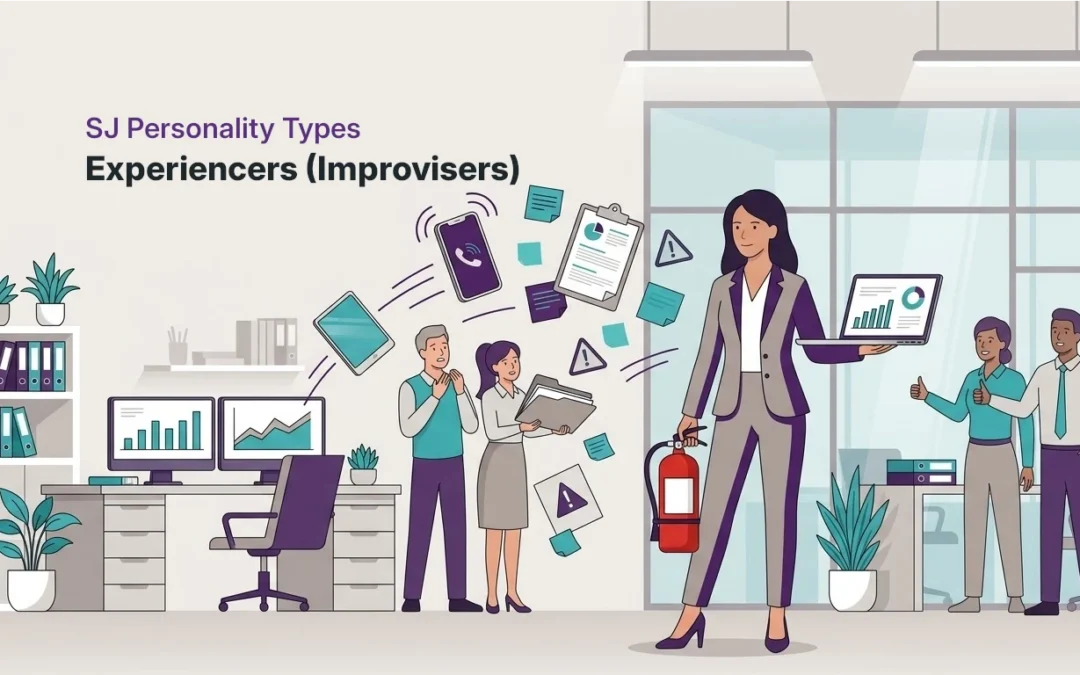
SP personality types, called Experiencers in the Talent Insights platform, are often responsive, adaptable, and action-oriented. This quadrant includes ESTP, ISTP, ESFP, and ISFP. Experiencers tend to thrive in environments where quick thinking, hands-on activity, and real-time problem solving are valued.
Among the 16 personality types, SP personalities are often the individuals who move quickly when situations change. They typically prefer practical action over extended planning and are often comfortable adjusting as circumstances evolve.
In many workplace settings, Experiencers help teams respond quickly to new challenges, adapt to shifting conditions, and solve problems in the moment.
What Are SP Personality Types?
The SP quadrant includes four personality types:
- ESTP
- ISTP
- ESFP
- ISFP
These personalities often share a strong preference for direct experience and practical engagement with the world around them. They tend to be attentive to their environment and comfortable responding quickly when circumstances shift.
In the Talent Insights Benchmark tool, this same quadrant is sometimes described as Improvisers, highlighting the ability of these personalities to adapt quickly and respond effectively in changing situations.
Quick Summary of the SP Quadrant
| Quadrant Name | Experiencers |
| Type Group | SPs |
| Benchmark Role | Improvisers |
| Core Theme | Responsive, spontaneous, action-oriented |
| Workplace Strength | Adaptability and practical problem solving |
Core Traits of Experiencers
Experiencers often share characteristics such as:
- Adaptability
- Quick situational awareness
- Comfort with fast decisions
- Preference for hands-on learning
- Practical problem solving
- Responsiveness to real-time needs
- Energy in active environments
These personalities often prefer environments where they can stay engaged with real situations rather than working only through abstract plans or theoretical models.
How SP Personality Types Show Up at Work
Experiencers often contribute through responsiveness, flexibility, and the ability to act quickly when circumstances change.
In workplace settings they may be the individuals who:
- solve problems in the moment
- adapt quickly when plans shift
- handle urgent or unpredictable situations
- bring energy and momentum to teams
- translate ideas into practical action
SP personalities often perform well in environments where quick thinking and adaptability are important.
Experiencers as Improvisers
In the Talent Insights Benchmark tool, SP personalities are sometimes called Improvisers. This reflects the way these individuals often respond effectively in changing or unpredictable situations.
They may contribute to teams by:
- responding quickly to new challenges
- finding practical solutions under pressure
- adjusting plans as new information appears
- keeping work moving when conditions change
Whether called Experiencers or Improvisers, the core pattern is the same: these personalities tend to engage directly with situations and respond in real time.
SP Personality Types
ESTP Personality – Coming Soon
An energetic and action-oriented type often associated with quick decisions, adaptability, and confident problem solving.
ISTP Personality – Coming Soon
A calm and practical type known for hands-on problem solving, technical skill, and independent thinking.
ESFP Personality – Coming Soon
An enthusiastic and expressive type often associated with energy, adaptability, and engaging communication.
ISFP Personality – Coming Soon
A thoughtful and flexible type often associated with creativity, responsiveness, and personal authenticity.
Why Experiencers Matter on Teams
Organizations often benefit from individuals who can adapt quickly and respond effectively when circumstances change. Experiencers frequently provide that capability.
They can be especially valuable in roles or teams that require:
- rapid problem solving
- practical action
- situational awareness
- adaptability under pressure
- hands-on responsiveness
In environments where plans frequently shift or unexpected challenges appear, SP personalities often help teams stay flexible and effective.
How Talent Insights Uses the SP Quadrant
The Talent Insights MAP assessment includes the 16 personality framework alongside DISC behavioral tendencies and Holland occupational interests.
Within that system, the SP quadrant helps identify individuals who may naturally respond well to dynamic environments and real-time problem solving.
Understanding this quadrant can help organizations think more clearly about:
- team balance
- operational responsiveness
- communication preferences
- role fit
- situational decision-making
Related 16 Personality Guides
- 16 Personality Types Explained
- SJ Personality Types
- NF Personality Types – Coming Soon
- NT Personality Types – Coming Soon
Frequently Asked Questions
What are SP personality types?
SP personality types include ESTP, ISTP, ESFP, and ISFP. In the Talent Insights framework they are called Experiencers.
Why are SP personalities called Experiencers?
They are called Experiencers because they often prefer direct engagement with real situations and practical action.
What does Improviser mean in the Benchmark tool?
In the Benchmark tool, SP personalities are sometimes described as Improvisers because they often adapt quickly and respond effectively in changing situations.
Are all SP types the same?
No. Each SP type has a distinct personality pattern, but they share a broader tendency toward adaptability and real-time responsiveness.
Hire Better and
Manage Smarter
We combine 3 proven, established assessments into one, giving you the most comprehensive view of a person.
Are you seeking an assessment for personal use? Click Here