
Personality Types Explained Series: DISC • Holland • 16 Personalities
ISFP Personality Type: The Artist
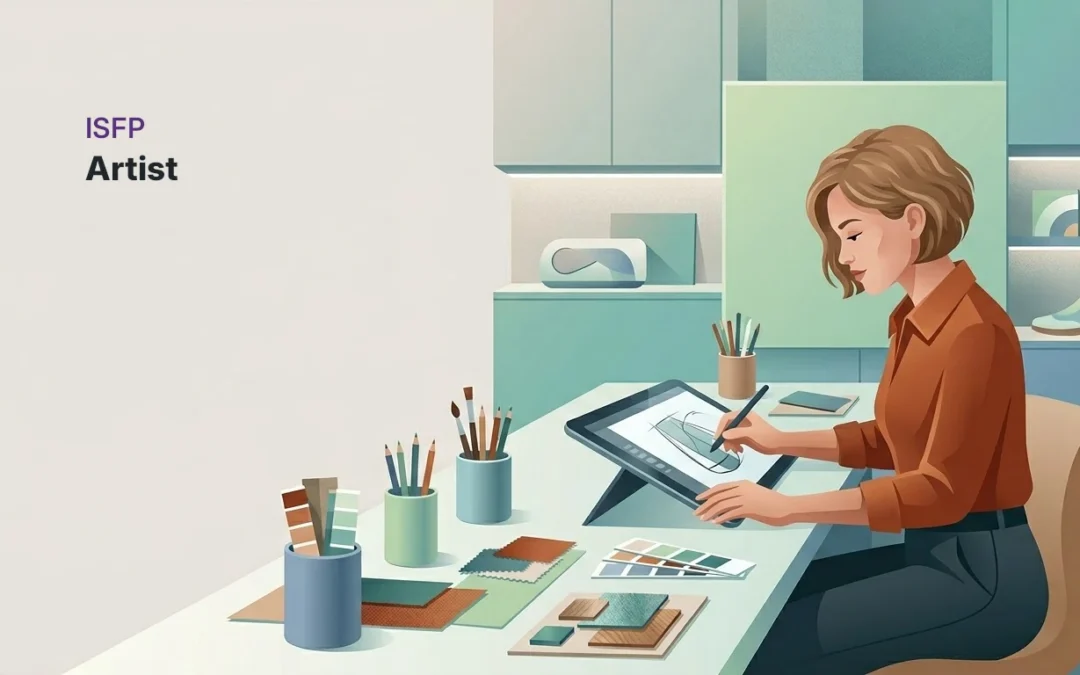
The ISFP personality type—often called The Artist—is defined by creativity, craftsmanship, and a strong connection to personal expression. ISFPs are hands-on creators who prefer to work independently, shaping ideas into tangible outcomes.
In the workplace, ISFPs are often the ones bringing a unique touch to their work—focusing on quality, aesthetics, and doing things well in their own way.
What Does ISFP Stand For?
- I – Introversion: Prefers focused, independent work
- S – Sensing: Engages with real-world materials and details
- F – Feeling: Guided by personal values and expression
- P – Perceiving: Prefers flexibility and creative freedom
Together, these traits create a personality that is creative, adaptable, and deeply connected to the work they produce.
Core Traits of the ISFP Personality
1. Hands-On Creator
ISFPs prefer to work directly with materials, tools, or mediums. They learn by doing and refine their work through experience.
2. Strong Sense of Aesthetics
They care about how things look and feel, often bringing a refined sense of design or craftsmanship to their work.
3. Independent and Self-Directed
ISFPs value autonomy and prefer the freedom to approach tasks in their own way.
4. Quietly Expressive
Rather than seeking attention, they express themselves through their work—letting the outcome speak for itself.
Strengths of ISFPs in the Workplace
- Strong creative and aesthetic sensibility
- Hands-on craftsmanship and attention to detail
- Adaptability and flexibility
- Ability to produce high-quality, tangible work
- Focus on authenticity and personal expression
Potential Blind Spots
- May resist rigid structure or strict processes
- Can prefer working alone over collaborating
- May avoid highly analytical or abstract tasks
- Can be sensitive to criticism of their work
With the right environment, ISFPs can channel their creativity into meaningful and impactful outcomes.
Best Career Paths for ISFPs
ISFPs thrive in roles that involve creativity, craftsmanship, and hands-on work.
- Design and creative fields
- Marketing and content creation
- Skilled trades and craftsmanship
- Media production and visual arts
- Product design and user experience
ISFPs in Hiring and Management
How ISFPs Perform in Structured Interviews
ISFPs tend to perform best when they can demonstrate their work or discuss real examples of what they have created.
Working with ISFPs on a Team
To get the best from an ISFP:
- Provide autonomy and creative freedom
- Focus on outcomes rather than rigid processes
- Allow them to work independently when possible
- Give constructive, respectful feedback
Work Style
ISFPs prefer flexible environments where they can create, refine, and express ideas through their work.
How Talent Insights Helps You Understand ISFPs
Talent Insights helps identify ISFP tendencies within a broader personality framework that includes DISC and Holland Code dimensions.
- Benchmark candidates for creative and hands-on roles
- Compare candidates using structured evaluation methods
- Use structured interviews to assess creative output
- Build teams with strong design and craftsmanship capabilities
This helps organizations place ISFPs in roles where their creativity and independence drive value.
Related Personality Types
Final Thoughts
ISFPs bring creativity, craftsmanship, and authenticity to organizations. When given the freedom to create and refine their work, they produce results that are both practical and expressive.
Hire Better and
Manage Smarter
We combine 3 proven, established assessments into one, giving you the most comprehensive view of a person.
Are you seeking an assessment for personal use? Click Here