
Personality Types Explained Series: DISC • Holland • 16 Personalities
DISC Personality Types Explained
D, I, S, and C at Work, in Communication, and in Leadership
DISC personality types describe how people tend to behave at work, communicate with others, approach pace and change, and respond to rules or structure. The four DISC styles are Dominance (D), Influence (I), Steadiness (S), and Compliance (C), and each offers a different perspective on workplace behavior and team dynamics.
The DISC model is one of the most widely used frameworks for understanding behavioral style. It does not measure intelligence, skills, or values. Instead, it helps explain how people tend to approach problems, interact with others, handle pace, and respond to expectations.
That makes DISC especially useful in the workplace, where differences in communication style, decision-making, urgency, and structure can strongly influence team performance.
What Is the DISC Personality Model?
DISC is a behavioral framework built around four core tendencies:
- D – Dominance: direct, decisive, results-oriented
- I – Influence: outgoing, persuasive, enthusiastic
- S – Steadiness: patient, supportive, dependable
- C – Compliance: analytical, careful, detail-oriented
Most people are not defined by only one trait. However, many individuals show a stronger pattern in one or two areas, which helps explain how they naturally behave in work situations.
Quick Summary of the Four DISC Styles
| DISC Style | Core Focus | Typical Strength |
| Dominance (D) | Results, control, challenge | Decisive leadership |
| Influence (I) | People, communication, enthusiasm | Motivating others |
| Steadiness (S) | Support, consistency, cooperation | Dependability and teamwork |
| Compliance (C) | Accuracy, quality, structure | Careful analysis |
Why DISC Matters at Work
The DISC model is especially helpful in workplace settings because it gives managers and employees a practical way to understand behavioral differences.
DISC can help organizations improve:
- Team communication
- Leadership development
- Hiring and role alignment
- Conflict reduction
- Coaching and employee development
- Self-awareness across teams
For example, a High D employee may prefer direct communication and fast decisions, while a High S teammate may prefer stability and a more collaborative pace. Neither style is better; they simply bring different strengths and needs to the workplace.
The Four Core DISC Personality Types
Dominance (D)
People with stronger Dominance tendencies are often direct, competitive, and focused on results. They tend to move quickly, take initiative, and feel comfortable making decisions.
Read: High D Personality (Dominance)
Influence (I)
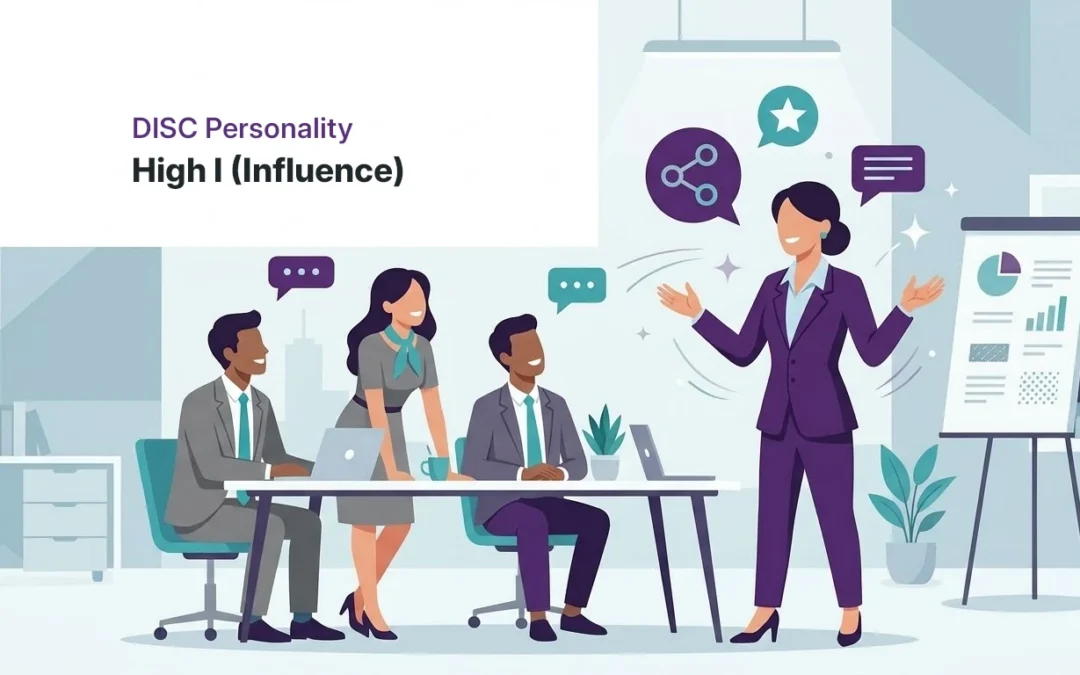
People with stronger Influence tendencies are often outgoing, expressive, and people-oriented. They tend to enjoy communication, collaboration, and motivating others.
Read: High I Personality (Influence)
Steadiness (S)
People with stronger Steadiness tendencies are often calm, supportive, and dependable. They tend to value consistency, teamwork, and stable relationships.
High S Personality (Steadiness) – Coming Soon
Compliance (C)
People with stronger Compliance tendencies are often analytical, careful, and focused on quality. They tend to value accuracy, logic, and structure.
High C Personality (Compliance) – Coming Soon
How DISC Traits Shape Communication
One of the most useful aspects of DISC is that it helps explain why people communicate differently.
- D styles often prefer direct, concise communication
- I styles often prefer expressive, engaging conversation
- S styles often prefer calm, supportive communication
- C styles often prefer precise, thoughtful communication
Understanding these patterns can reduce miscommunication and help teams work together more effectively.
How DISC Helps Managers and Leaders
Managers who understand DISC can often lead more effectively because they can adapt their approach to fit the behavioral needs of different team members.
For example, managers may learn to:
- Give High D employees more autonomy and direct goals
- Recognize and encourage High I employees more openly
- Provide stability and support to High S employees
- Offer clear expectations and detail to High C employees
This does not mean treating people unfairly or inconsistently. It means communicating in ways that help each person perform at their best.
DISC Blends and Secondary Styles
Many people do not fit neatly into a single DISC letter. Instead, they show a blend of two stronger styles, such as DI, SC, or CD. These combinations can add nuance to how someone leads, communicates, and works.
As this series expands, we will also publish guides for common DISC blends and combinations.
DISC Blend Types – Coming Soon
How Talent Insights Uses DISC
The Talent Insights MAP assessment uses DISC as one part of a broader personality and workplace insight system.
Within MAP, DISC helps reveal:
- behavioral style
- communication tendencies
- pace and urgency preferences
- response to structure and expectations
Because MAP also includes Holland occupational interests and 16 personality patterns, it gives a more complete view of how people work than any single framework alone.
Frequently Asked Questions
What are the four DISC personality types?
The four DISC personality types are Dominance (D), Influence (I), Steadiness (S), and Compliance (C). Each describes a different behavioral style and way of interacting at work.
What does DISC measure?
DISC measures behavioral tendencies such as communication style, pace, approach to problems, and response to structure. It is designed to explain how people tend to behave, especially in workplace settings.
Which DISC personality type is best?
No DISC style is inherently better than another. Each brings its own strengths, challenges, and contributions to a team.
Can DISC help with hiring and team development?
Yes. DISC can help organizations better understand work style, communication preferences, and team dynamics, which can support hiring, management, and employee development decisions.
Hire Better and
Manage Smarter
We combine 3 proven, established assessments into one, giving you the most comprehensive view of a person.
Are you seeking an assessment for personal use? Click Here